Date: 2025-12-20
In the world of heavy earthmoving, an excavator is only as reliable as its hydraulic veins. A hose failure in the middle of a job doesn't just mean a mess of oil—it means expensive downtime, environmental fines, and potential safety risks.
Being proactive can save you lakhs in repairs. Here are the clear warning signs that your excavator hose assembly is reaching its breaking point:
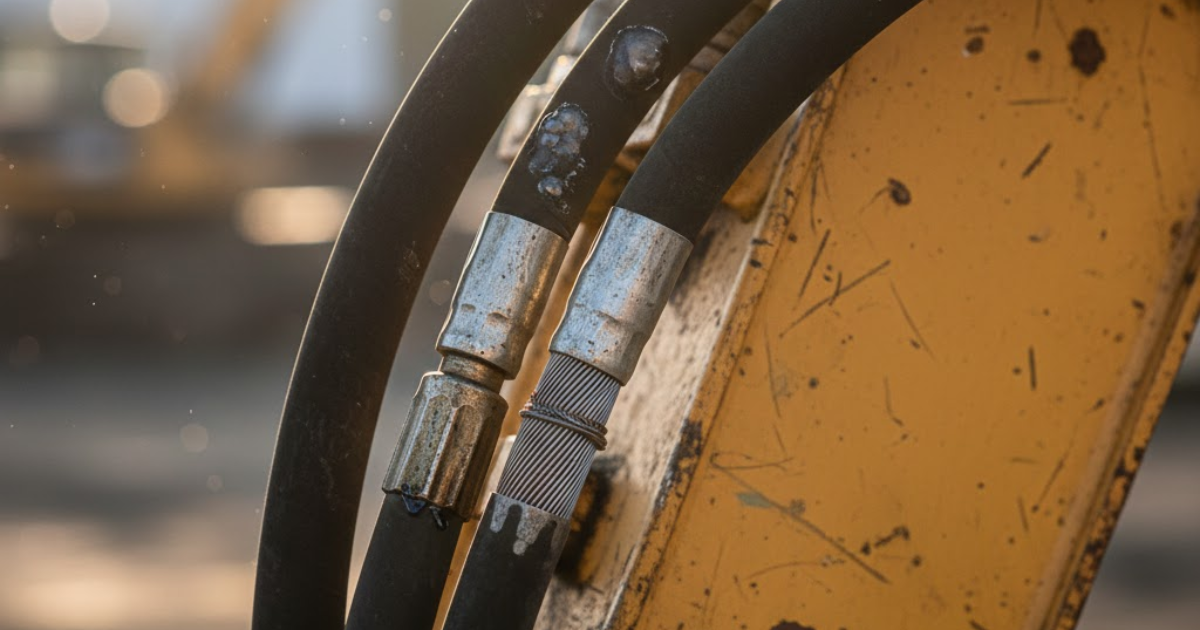
If you see small bumps or blisters on the outer cover of the hose, it’s a major red flag. This means the inner tube is damaged, and high-pressure oil has leaked through to the outer layers. It could "pop" at any second.
When the outer rubber cover wears away due to friction or age, the steel wire braid underneath becomes visible. Once the steel is exposed, it begins to rust. This makes the wire brittle, and a burst becomes inevitable under heavy load.
If you notice a thin film of oil around the crimped ends (fittings), even if it’s not a "spray," it is a sign of trouble. It indicates that the seal between the hose and the metal fitting is degrading due to excessive vibration or pressure spikes.
Hydraulic hoses should be flexible. If a hose feels stiff or shows tiny cracks when it moves, it has "heat aged." Brittle rubber cannot handle the constant movement of an excavator arm and will eventually crack open.
Look for sections where the hose looks twisted or flattened. A kinked hose creates a massive pressure drop and generates intense heat at that specific spot, weakening the structure until it ruptures.